Ethiopia Guji Uraga "Perfume Lemon"
71.00 MYR
Tasting Note: White Floral | Lemon | Peach | Black Tea
| Varietal | Processing Method | Altitude |
| Heirloom | Washed | 2100-2200m |
Size: 200g/1kg
Brewing Recommendation: Filter Brews / Modern Espresso

71.00 MYR
Tasting Note: White Floral | Lemon | Peach | Black Tea
| Varietal | Processing Method | Altitude |
| Heirloom | Washed | 2100-2200m |
Size: 200g/1kg
Brewing Recommendation: Filter Brews / Modern Espresso

Tasting Note: Bright Floral | Lemon | Bergamot | Lemon Cream | Dried Apricot | Black Tea
| Varietal | Processing Method | Altitude |
| Landrace | Washed | 1900-2200m |
Size: 200g/1kg
Brewing Recommendation: Filter Brews / Modern Espresso
Bergamot leads this coffee, followed by citrusy but sweet acidity that reminds us of lemon cream, with a black-tea finish. A classic result of a Washed Landrace lot from Ethiopia, this time processed in Banko Chelchele.
Gedeb is one of the woredas in the coffee trade’s wider Yirgacheffe/Gedeo region, so “Yirgacheffe” is the familiar signpost, while Gedeb gets us closer to the place. Chelchele sits around 2,000 m; one importer connects its floral-forward character with the high-elevation microclimate, deep red fertile soil, local varieties and processing practices.
Landrace means a traditional, locally adapted coffee variety shaped over time in its natural and farming environment. Think of it as coffee with a long local memory. Ethiopian landraces are generally associated with high cup quality and lower yields.
Dial it in, then grab a bag online for your next citrus-and-floral brew session.
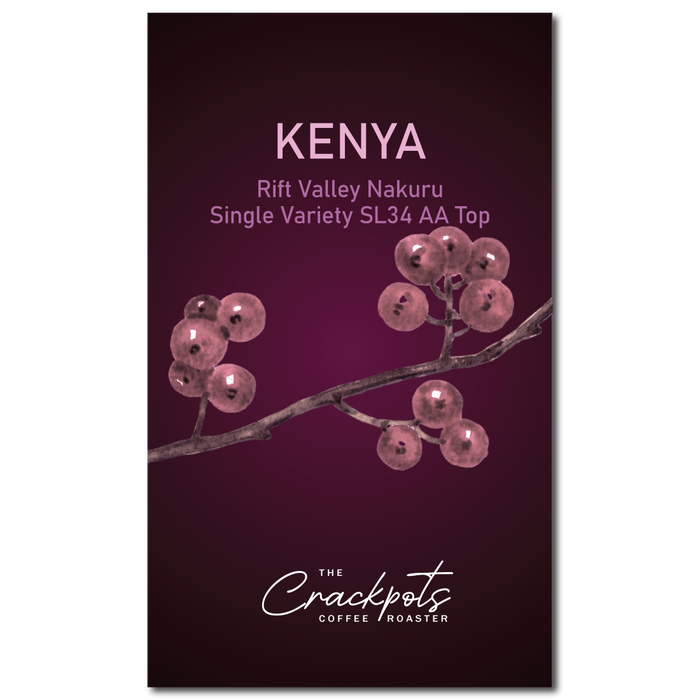
Tasting Note: Blackcurrant | Plum | Hawthorn | Cedar
| Varietal | Processing Method | Altitude |
| SL34 | Washed | 1500-2000m |
Size: 200g/1kg
Brewing Recommendation: Filter Brews / Modern Espresso
Grown in Kenya's Rift Valley near Nakuru, this single-estate, SL34 AA Top reflects the region's high elevation, volcanic soils, and steady climate — conditions that encourage slow cherry development and layered flavour. Kenyan coffees have long been known for their structure and clarity, and this lot carries that reputation with quiet confidence.
The varietal, SL34, is a part of Kenya's historic SL selection, valued for its resilience at altitude and its ability to express terroir with depth and balance. Compared to other Kenyan cultivars, SL34 often lean slightly rounder in body while maintaining vibrant acidity.
In the cup, expect Hawthorn and red-berry notes, often with a blackcurrant edge, supported by a medium, structured body. As it cools, the sweetness becomes more defined, revealing layers that feel deliberate and composed rather than dramatic.
Tasting Note: Orange Blossom | Apple | Plum | Assam Milk Tea
| Varietal | Processing Method | Altitude |
| Gesha | Wet-ferment washed, greenhouse-dried | 1300-1400m |
Size: 200g/1kg
Brewing Recommendation: Filter Brews / Modern Espresso
This is a rare sight of a Gesha from Myanmar grown at 1,300–1,400 m, processed as a Wet-ferment washed coffee (dried in a greenhouse); it is from Pyin Oo Lwin, formerly Maymyo, has a long Arabica history and is among the Myanmar locations where Arabica was introduced in the 1930s before expanded cultivation.
“Washed” sounds a bit like laundry, but here it means the coffee’s fruit and mucilage are removed before the parchment coffee is washed and dried. That route is useful for anyone chasing contrast rather than fermentation fireworks: washed coffees commonly foreground clarity and clean, crisp acidity instead of fruit-driven ferment character.
Aroma moves from orange blossom to apple, then the taste lands on plum. The finish recalls Assam milk tea, giving this cup a soft-spoken closing note after the fruit. Try it when you want an unfamiliar coffee that still knows how to make its point.
Order a bag online and take this plum-led Myanmar Gesha somewhere new.
51.00 MYR
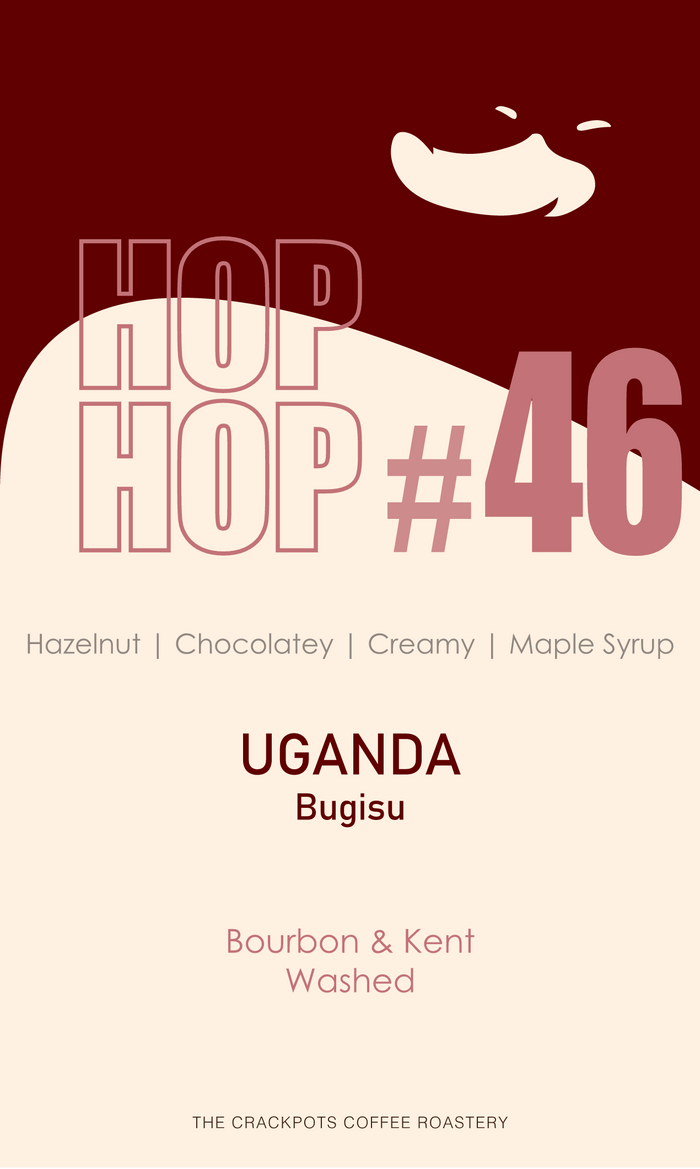
Tasting Note: Genmaicha | Black Tea | Roasted Walnut | Vanilla
| Varietal | Processing Method | Altitude |
| Syrina | Dry-ferment washed | 1200-1400m |
Size: 200g/1kg
Brewing Recommendation: Filter Brews / Modern Espresso
This is a Syrina coffee from produced by CSG in 2026 as an experimental dry-ferment washed coffee. Peaberry (single round seed) separation means the coffee seeds are sorted out based on an interesting genetic defect: the coffee seed stayed as one instead of splitting into two halves as usual.
Syrina is a hybrid Arabica selected in northern Thailand by Kaleb Jordan, with a genetically complex lineage that includes Sarchimor, Mundo Novo, Typica, Bourbon and Timor Hybrid. Think of it as a family tree with a few extra branches. Its documented history is Thai; there is no published record of how it reached Maymyo, so that part of this coffee’s story stays honestly unanswered.
Start with Black Tea, then look for roasted walnut. Genmaicha brings the aromatic cue, while vanilla sits in the mouthfeel. Washed coffees are generally associated with clarity and a clean, crisp acidity, a useful frame for paying close attention to this lot’s bean character.
A precise, traceable-feeling coffee without pretending its unknowns are solved. Brew with attention, then let the tea-like centre do the talking.
Order a bag online for the discerning cup, then take your time finding that Black Tea centre.
Tasting Note: White Floral | Papaya | Pomelo | Sweet Finish
| Varietal | Processing Method | Altitude |
| Bourbon Ají | Washed | 1500-1800m |
Size: 200g/1kg
Brewing Recommendation: Filter Brews / Modern Espresso
A washed Chili Bourbon grown by Brayan Smith at Las Brisas in Huila, Colombia, grown between 1,500 and 1,800 metres. Chili Bourbon is a variety whose name says Bourbon while its genetics say newly discovered Ethiopian landrace.
Well, Chili Bourbon is not a Bourbon. When a Huila lot entered simply as “Ají” placed 6th at the 2021 Colombia Cup of Excellence, the Alliance for Coffee Excellence commissioned RD2 Vision to test the variety and published the finding: not a Bourbon, but a newly discovered Ethiopian landrace not found in many accessions, including CATIE's collection. Accessions are the catalogued reference collections where the coffee world keeps plant material on file, so that sentence is a polite way of saying nobody had this one filed anywhere.
The name came from a smell, not a lab. José Herman Salazar, the Huila producer who found the tree, caught a warm, peppery character coming off the fruit as it broke from the branch at harvest, assumed a Bourbon mutation, and called it Bourbon Ají. “Ají” is the South American word for chili. You will also see it written as Chilli Bourbon, Ají Bourbon or plain Ají, all the same plant. One thing we will not blur: that competition placing belongs to Salazar's Finca La Guaca, a different producer on a different farm, and never to this lot.
Brayan Smith is a third-generation grower who owns the farm, leads a local coffee association, and passes tools and knowledge along to the smallholder families farming around him. Las Brisas is not a one-variety place: Pink Bourbon, Geisha, Sidra, Castillo, Caturra and Chili Bourbon all grow there, and the lot reaches us through Cofinet, the Colombian exporter that represents him. Worth stating plainly, since roaster copy muddles it often: Las Brisas grows this variety, but it is not where the variety was found.
The house notes are papaya, cardamom and panela: soft tropical fruit first, a dry spice note sitting just behind it, and panela, unrefined cane sugar, holding the base through the finish.
Order a bag online and give it a slow, careful pour. This is coffee with character, and it earns a discerning cup.
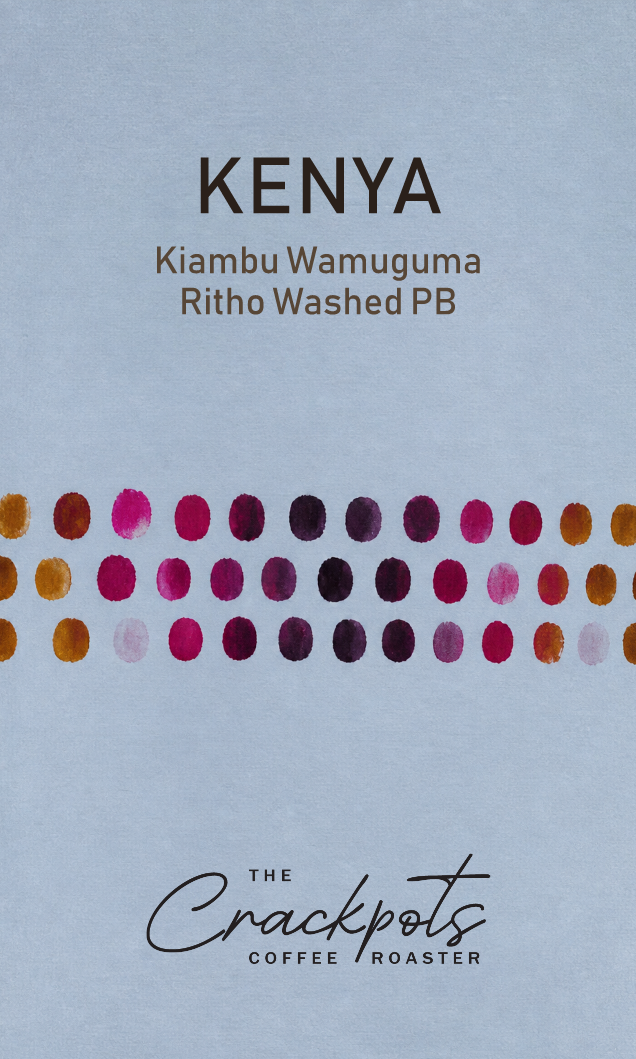
61.00 MYR
Tasting Note: Hibiscus | Blackcurrant | Dark Berries | Red Berry Jam | Syrupy Sweetness
| Varietal | Processing Method | Altitude |
| SL28, SL34, Ruiru 11, Batian | Washed | 1600-1800m |
Size: 200g/1kg
Brewing Recommendation: Filter Brews / Modern Espresso
PB means peaberry. In Kenya, it identifies cherries in which one ovule develops instead of the usual two; the beans are physically sorted by screen size. Useful context for the curious brewer: PB is a sorting selection, not a promise that every cup must taste a certain way.
This lot comes from Wamuguma at 1,600–1,800 m. It was wet-processed at Wamuguma Factory, one of two wet mills operated by Ritho Farmers Cooperative Society in Gatundu South Sub-County, Kiambu County.
SL28, SL34, Ruiru 11 and Batian make up the varietal mix. Think of it as four different entries on the Kenyan coffee family tree: SL28 and SL34 are older selections, while Ruiru 11 and Batian were bred with disease resistance in mind. That background is interesting, though it does not prescribe this particular lot’s flavour.
Aroma moves from hibiscus and brown sugar into blackcurrant, dark berries and red berry jam, then finishes full-bodied with syrupy sweetness. For an enthusiast, that is your cue to brew with intention and let the berry notes do the talking.
Add a bag online, then dial in that blackcurrant-led cup with the attention it deserves.